Reichian characterology types revealing hidden blocks in your somatic healing journey
The Reichian characterology five types offer a profound framework for understanding how emotional suppression, body armor, and character structure shape human experience and behavior. Rooted in the pioneering work of Wilhelm Reich and later expanded by Alexander Lowen’s bioenergetic analysis, these five character structures reveal the unconscious defenses individuals cultivate to navigate early developmental wounds, particularly the oedipal wound, and to protect against vulnerability. Understanding these five types—commonly identified as the schizoid, oral, psychopathic, masochistic, and rigid (or genital) characters—illuminates the diverse ways the body encodes trauma and holding patterns, which impel patterns like emotional guarding, perfectionism, and compulsive achievement. For psychotherapists, psychology students, and individuals engaged in self-development or therapy, this system provides a practical somatic roadmap to recognize and work through character armor, offering a path to genuine emotional release and psychological flexibility.
Transitioning into the exploration of each character structure allows us to contextualize the lived struggles behind the clinical terms—how the body tension embodies emotional conflict, how specific character defenses guard against palpable fears such as abandonment or engulfment, and how bioenergetic work can soften these rigidities to restore natural energy flow and authentic connection.
Foundations of Reichian Characterology and Its Clinical Relevance
The Origin and Core Concept of Character Armor
Wilhelm Reich’s characterology begins with the insight that personality is not solely a psychological phenomenon but is deeply enmeshed with the body’s muscular and energetic expressions. Reich observed that emotional trauma and unmet developmental needs lead to persistent muscular constriction patterns—what he termed character armor. These physical tensions serve as unconscious defense mechanisms to block overwhelming feelings such as rage, grief, or fear from entering conscious awareness. Through this lens, psychological symptoms manifest alongside bodily rigidity or chronic tension, illustrating how the psyche and soma are inseparable.
Reich identified five major character types, each supported and defined by a distinct configuration of muscular and emotional blocks. These types develop primarily out of the oedipal wound, a foundational relational trauma during the early childhood stage when autonomy, love, and dependence are negotiated. By recognizing these character patterns, clinicians can better understand the protective functions clients erect, moving beyond surface behaviors to address the underlying bioenergetic disruptions.
Integrating Bioenergetic Analysis: Alexander Lowen’s Contributions
Alexander Lowen extended Reich’s theory by offering precise somatic techniques aimed at dissolving character armor. His bioenergetic analysis focuses on the interplay between breath, posture, and emotional expression. Lowen emphasized that the five character structures have specific bodily manifestations: for example, the rigid genital character manifests in taut pelvic musculature and inhibited breath, whereas the oral character might display collapsed upper thoracic regions and a tendency toward nervous breath patterns.
This integration allows therapists working somatically to observe and palpate body areas where emotional energy is stalled, aiding in releasing long-held suppressions via grounding exercises, breath work, and movement. For patients, this somatic dialogue with the body reveals how perfectionism or compulsive achievement efforts are grounded in deep-seated fears of vulnerability sustained by muscular holding patterns.
The Five Reichian Character Types: Comprehensive Overview
The five types—the schizoid, oral, psychopathic, masochistic, and rigid (genital)—each represent alternate ways individuals protect their core self from perceived relational threats. These structures simultaneously explain various social defenses, psychological symptoms, interpersonal dynamics, and body tensions. Importantly, these types are not fixed personality labels but dynamic configurations that can shift in therapy. Recognizing one’s predominant character type fosters powerful self-understanding and opens a path for releasing chronic tension, emotional numbness, or prohibitive control mechanisms.
With these broad theoretical underpinnings set, the following sections delve deeply into each Reichian character type—exploring how their body armor manifests, the psychological payoffs of their defenses, and how therapeutic somatic approaches can facilitate healing.
The Schizoid Character: Isolation Under the Cloak of Detachment
Psychological Landscape: Fear of Intrusion and Emotional Disconnection
The schizoid character develops in response to early relational trauma marked by fears of invasion and engulfment. Psychologically, this type exhibits detachment, emotional numbness, and a preference for intellectualization over bodily feeling. The protective armor the schizoid develops functions as a fortress, shutting down affective experience to avoid the pain of dependency and rejection. Internally, the schizoid carries an ongoing tension between the desire for connection and the terror of losing autonomy.
Somatic Expression: Fragmented Body and Suppressed Breath
Somatically, the schizoid character demonstrates a segmented or fragmented posture with a collapsing spine and tightness around the thorax. Breath is often shallow and irregular, reflecting the disconnection between upper and lower body. This body armor inhibits full somatic presence, particularly around the heart and sacral regions, symbolic of emotional cutoff and sexual inhibition. The musculature is neither completely relaxed nor fully engaged, producing chronic drained energy and fatigue.
Therapeutic Implications: Reintegrating Body and Affect
Therapeutic focus involves gently encouraging the schizoid patient to inhabit the body fully and acknowledge suppressed emotions. Techniques such as breath awareness, grounding exercises, and slow movement help dissolve the armor’s fragmentation. Bioenergetic work targets the thoracic cage and pelvis, unlocking blocked energy and facilitating the return of spontaneity. Psychotherapy supports reclaiming relational safety, gradually reducing emotional isolation, and allowing vulnerability without the fear of losing self-boundaries.
The Oral Character: Clinging to Dependence and Emotional Void
Psychological Profile: Dependency and Yearning for Nurturance
The oral character type roots in early childhood experiences of emotional deprivation or inconsistent nurturance. This structure manifests as a deep longing for connection, coupled with fear of abandonment. The oral person often feels empty internally, guarded by a compulsive need to attract and hold others to fill emotional voids. Perfectionism here often masquerades as people-pleasing or excessive caregiving, holding vulnerability at bay by ensuring others’ approval.
Manifestation in the Body: Collapsed Posture and Constricted Lower Face
In body language, the oral character typically exhibits a collapsed chest, protruding abdomen, and limited diaphragmatic breathing. Muscles around the jaw and neck tend to be chronically tense, reflecting unresolved oral fixations and the refusal to fully express anger or frustration. This bodily restriction embodies emotional suppression and fear of expressing authentic anger that might jeopardize attachment.
Pathways to Healing: Building Internal Nourishment and Assertive Boundaries
Somatic therapy focuses on expanding the breath, opening the chest, and loosening jaw tension to release pent-up feelings. Bioenergetic exercises aim to revive the gut and solar plexus regions, fostering a capacity for self-support and grounded assertion. Therapeutic work involves addressing early attachment wounds to nurture internal sources of safety, reducing dependency on external validation, and cultivating the courage to tolerate vulnerability without clinging.
The Psychopathic Character: Defiance and Fear of Weakness

Emotional Dynamics: Power, Control, and Vulnerability Masking
The psychopathic character type develops a fortress of self-sufficiency, masking deep fears of weakness and rejection behind aggressive control and dominance. This type often struggles with intimacy, expressing emotions through anger or detachment rather than vulnerability. The fear beneath the surface is a profound reluctance to surrender control, because surrender equates to exposure and potential hurt.
Bodily Manifestations: Tense, Explosive Chest and Assertive Bearing
Somatically, psychopathic characters tend to have a rigid, muscular upper torso, prominent chest, and clenched fists. Breath may be constricted yet forceful, demonstrating their readiness to assert control or defend against perceived threats. This body tension is tied to a chronic adrenalized state, hardening the individual's capacity to relax or surrender emotional guardrails.
Therapeutic Strategy: Embracing Vulnerability Through Somatic Release
Effective therapy involves creating safe environments where the psychopathic individual can experience the power in emotional softness. Bioenergetic release techniques focus on softening chest and arm tension, encouraging emotional expression through controlled breathing and grounded movement. Psychotherapeutic work often accompanies somatic practice to dismantle defensive narratives and cultivate empathy and self-compassion, helping the client think beyond power dynamics toward authentic relational engagement.
The Masochistic Character: The Paradox of Control Through Submission
Inner Conflict: Resisting Power by Welcoming Pain
The masochistic character is marked by a complex interaction of control and surrender, often manifesting as passivity and compliance but undergirded by subtle rebellions or self-damaging behavior. This structure arises when early authority figures were ambivalent or harsh, leading to internalized messages that power comes through suffering and sacrifice. The masochistic individual may display perfectionistic tendencies to merit acceptance, while simultaneously fearing autonomy for its potential costs.
Physiological Profile: Restrained Pelvic Musculature and Stiffened Diaphragm
Somatically, the masochistic character holds tension in the pelvic floor and diaphragm, areas that correlate with restricted sexuality and inhibited emotional release. Limiting the natural breath, they guard against spontaneity and the vulnerability that comes with freedom. Their body posture may appear stoic or resigned, with subtle muscular contractions that speak to internalized suffering and control through restraint.
Clinical Approaches: Unlocking Pleasure and Reclaiming Agency
Therapeutic processes encourage discovering pleasure and ease within the body, progressively loosening pelvic and diaphragmatic blocks through bioenergetic exercises. Facilitating access to suppressed feelings such as rage or sadness helps counter the passive facade. Psychotherapy aids in re-framing early relational scripts, empowering clients to establish boundaries and experience autonomy without the unconscious need to self-sabotage or surrender excessively.
The Rigid (Genital) Character: The Ideal of Strength and Emotional Containment
Psychological Characteristics: Perfectionism Rooted in Fear of Vulnerability
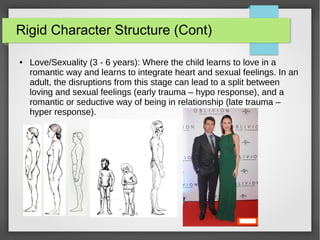
The rigid or genital character represents the culmination of the five types where defenses are sophisticated and often appear healthy on the surface. This character is preoccupied with control, order, and conscientiousness—traits often mistaken for mental strength or resilience. However, underneath lies a profound ambivalence toward emotional expression, guarded by perfectionistic standards and self-criticism aimed at preventing any crack in the armor.
Body Profile: Tense, Controlled Posture and Restricted Pelvic Expression
Somatically, this type manifests through tight, inflexible musculature throughout the body, especially in the shoulders, abdomen, and pelvic floor. Breath tends to be shallow and restrained, reinforcing the character armor that restricts emotional flow. The rigidity reflects a chronic strategy of emotional containment, preventing the body from experiencing vulnerability or the softer, more spontaneous aspects of intimacy.
Healing Trajectory: Cultivating Flexibility and Authentic Emotional Contact
Therapeutic work targets increasing bodily and emotional flexibility. Bioenergetic exercises encourage loosening of the pelvic and abdominal muscles combined with breath expansion, which facilitates access to deeper feelings and desires. The challenge is to soften the self-critical perfectionism and promote acceptance of imperfections as sources of authentic selfhood. Psychotherapy focuses on uncovering the oedipal wounds governing relational fears and creating new patterns of trust and emotional openness.
Connecting Theory to Practice: Why Mastering Reichian Characterology Matters
For Psychotherapists and Bodywork Practitioners
Mastering the Reichian characterology five types equips therapists with a nuanced diagnostic lens for identifying how clients’ trauma and relational histories manifest somatically and psychologically. rigid structure -centered diagnostic model guides effective intervention plans tailored to dismantling specific muscular armor patterns, enhancing the potential for emotional liberation and deeper client self-awareness. Anthropological sensitivity to character types prevents one-size-fits-all approaches, fostering attuned somatic work that respects individual defense needs while encouraging transformation.
For Psychology Students and Scholars
Understanding these five character types deepens theoretical comprehension of personality development in trauma and defense contexts, blending psychodynamic insights with somatic knowledge. It opens pathways to integrating body psychotherapy and traditional psychotherapy disciplines, enriching clinical perspectives on anxiety, depression, perfectionism, and interpersonal dynamics. Furthermore, it introduces vital concepts of the body-mind continuum, enriching academic frameworks and clinical research.
For People in Therapy and Self-Aware Adults
Awareness of one’s character structure fosters profound self-understanding, revealing how defense mechanisms related to perfectionism, control, emotional suppression, or compulsive achievement serve protective functions derived from early wounding. Learning about the five Reichian character types helps individuals recognize their bodily holding patterns and emotional avoidances, empowering them to engage actively in therapies such as somatic therapy and bioenergetics for genuine healing. This embodied insight softens rigidity, restores vital energy flow, and cultivates courage to embrace vulnerability.
Summary and Actionable Steps to Engage with Reichian Characterology
Reichian characterology’s five types uncover the vital interplay between early relational trauma, body armor, and emotional defenses, offering transformative insight into human behavior and somatic tensions. These character structures map the invisible emotional armor shaped by the oedipal wound and fear of vulnerability, manifested in distinctive body postures, breath patterns, and psychological strategies such as perfectionism or achievement compulsion.
To apply this knowledge:
- Self-Observation: Begin by tuning into your habitual body tensions, breathing patterns, and emotional responses to stress or intimacy. Reflect on how these may connect to one of the five Reichian character types.
- Therapeutic Partnership: Seek therapists skilled in Reichian and bioenergetic methods who can help decode and gently release your character armor, aligning body and psyche.
- Somatic Practices: Engage in breath work, grounding exercises, and movement therapies to dissolve rigidity and cultivate emotional presence, focusing on constricted areas associated with your character type.
- Reflective Integration: Combine somatic experiences with psychotherapeutic reflection to reconstruct relational narratives and address oedipal wounds lurking beneath defensive facades.
- Ongoing Commitment: Recognize that character structures are adaptive yet modifiable; sustained practice of embodied awareness and emotional openness can transform deeply ingrained armor and liberate authentic living.
Mastering the Reichian characterology five types equips individuals and clinicians alike with a rich, somatically grounded language for emotional healing, dismantling perfectionist defenses, and embracing vulnerability as a source of strength, vitality, and connection.